In short
- December to April is the rainy season in Bolivia.
- A thin layer of water creates a perfect sky reflection.
- May to November offers dry, geometric salt patterns instead.
In this article
- What causes the Salar de Uyuni mirror effect?
- What are the best months for the Salar de Uyuni mirror effect?
- How does the dry season compare to the wet season?
- Which tours take you to the mirror effect?
- When is the best time of day to photograph the mirror effect?
- Is the mirror effect always visible in the rainy season?
To see the sky reflected on the ground, you need to visit when the salt flat is wet. Timing is crucial because the water evaporates during the dry months. Here is exactly when to plan your trip.
What causes the Salar de Uyuni mirror effect?
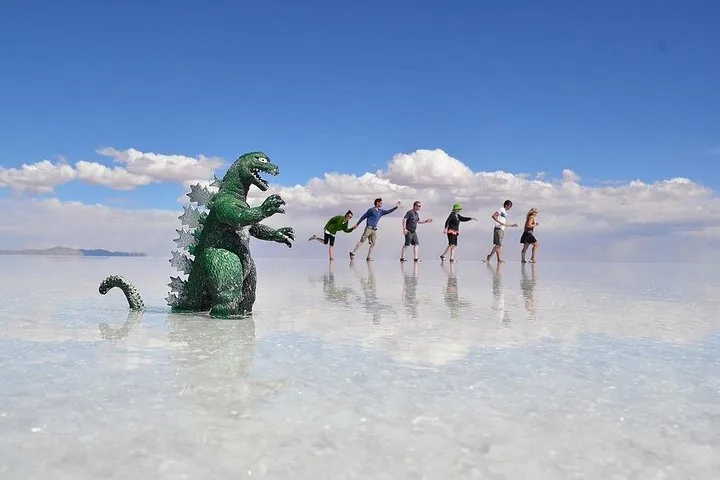
Rainwater pools on top of the salt crust to create a massive reflection.
During the wet season, the enormous 10,582 square-kilometer flat does not drain quickly. A thin layer of water sits on top of the crust. This transforms the ground into a massive, seamless natural mirror that reflects the sky perfectly.
What are the best months for the Salar de Uyuni mirror effect?
You should visit between December and April.
These months make up the rainy season in southwestern Bolivia. You need recent rain to create the water layer. If you visit in January, February, or March, your chances of seeing the reflection are highest.

How does the dry season compare to the wet season?
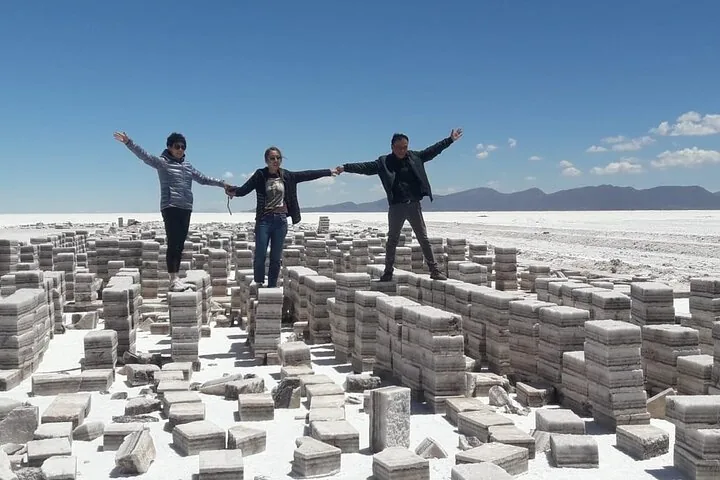
The dry season shows geometric salt patterns, while the wet season has the mirror effect.
From May to November, the salt flat dries completely. You will see brilliant white, dry terrain shaped like interlocking polygons. The dry season is also colder, with nighttime temperatures frequently dropping below freezing (0°C).
Which tours take you to the mirror effect?
Both day trips and multi-day tours stop to see the reflections when the flats are wet.
A 1-day tour is often enough to see the flooded areas near Uyuni town. The 9-hour day tour includes time in the salt water to see the sunset reflections. Tour operators often provide rain boots so you can walk in the water.
When is the best time of day to photograph the mirror effect?
Sunset is the most popular time to see the reflections.
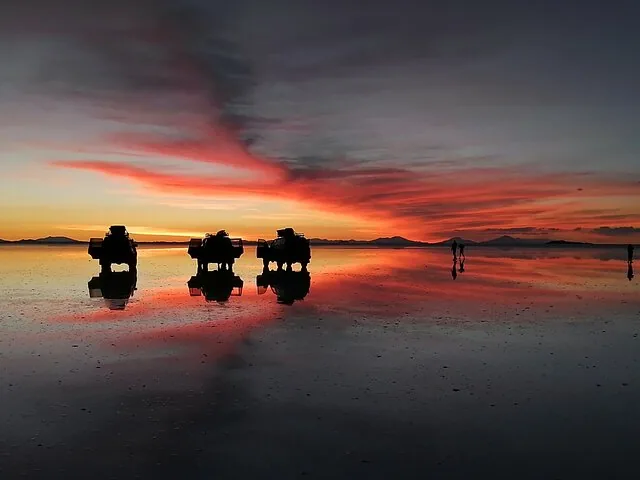
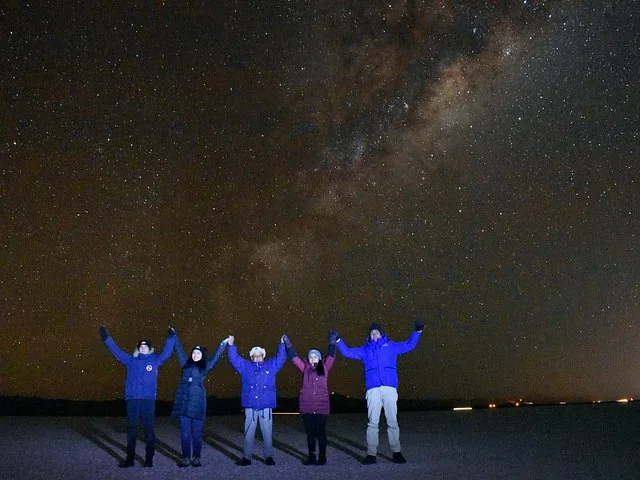
Many tours specifically time their visits to catch the afternoon and evening light. A sunset tour lets you see warm colors reflected perfectly on the ground. Some tours even stay past dark for stargazing, showing the Milky Way reflected in the salt water.
Is the mirror effect always visible in the rainy season?
No, you need recent rainfall and clear skies to see it.
If the rain is too heavy, tours might be delayed or flights to Uyuni can be canceled. If it has not rained for weeks, the water might evaporate. You need a balance of a flooded crust and calm weather to see the reflection.
Questions travellers ask
Can I walk on the salt flats when they are flooded?
Yes, but you will get wet. Most tour operators provide rain boots for visitors to walk in the shallow water during the wet season.
Does the mirror effect happen in San Pedro de Atacama?
No, the mirror effect happens on the Salar de Uyuni in Bolivia. You can take a 4-day tour from San Pedro de Atacama to reach the Bolivian salt flats.
What should I wear to see the mirror effect?
Bring polarized sunglasses with 100% UV protection. The reflection of the sun off the water and salt is intense and can cause snow blindness.